
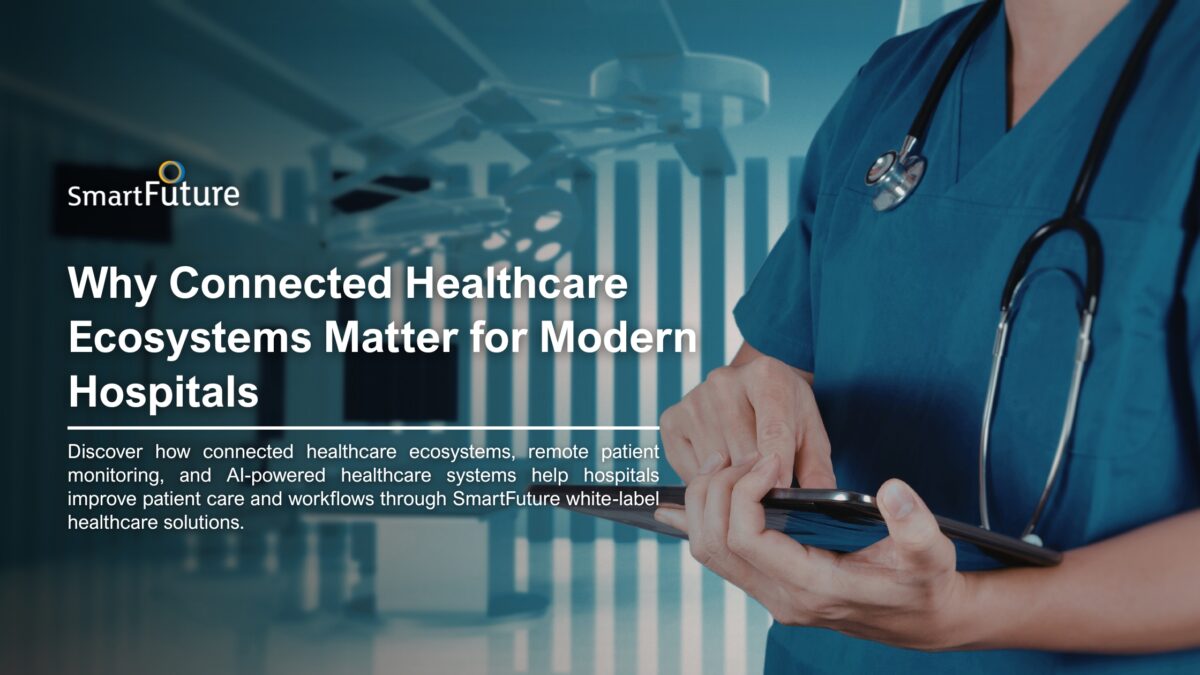
Why Connected Healthcare Devices Matter Today

In many modern hospitals, nurses still spend time manually recording patient vital signs, clinicians often need to open multiple systems to review patient information, and discharged patients may not always be monitored consistently once they return home. As remote care programmes continue growing, many healthcare providers are starting to realise that traditional workflows are becoming harder to manage efficiently.

For example, a patient recovering at home after surgery may only return to the hospital once symptoms become more serious. In some cases, healthcare teams do not receive enough visibility into the patient’s condition during recovery. This can lead to delayed intervention, avoidable complications, and higher hospital readmission rates.

Because of this, hospitals are increasingly looking for smarter healthcare systems that help improve patient visibility, simplify workflows, and support more proactive care delivery.

Today, healthcare technology is no longer just about standalone medical devices. Hospitals are now investing in connected healthcare ecosystems that combine:

  • Remote patient monitoring
  • AI-powered healthcare analytics
  • Connected healthcare dashboards
  • Hospital-at-home solutions
  • Automated health data collection
  • Smart rehabilitation support
  • Cellular healthcare monitoring
  • Digital patient engagement tools

Hospitals Are Moving Toward Connected Healthcare Systems

Many healthcare systems relied heavily on manual processes and fragmented platforms. However, healthcare delivery today extends far beyond hospitals and clinics alone.

Patients are now receiving care at home, joining rehabilitation programmes remotely, and using connected healthcare devices outside traditional clinical settings. At the same time, healthcare professionals are expected to monitor larger patient populations while responding faster to changing patient conditions.

This creates new operational challenges for hospitals, including:

  • Managing remote patient monitoring
  • Reducing hospital readmissions
  • Improving communication between care teams
  • Monitoring patients more consistently
  • Handling larger volumes of patient data
  • Maintaining operational efficiency

This is where connected healthcare infrastructure becomes increasingly important.

Instead of relying on separate systems that operate independently, hospitals are moving toward more integrated healthcare ecosystems that allow patient data, monitoring devices, and healthcare teams to work together more efficiently.

According to World Health Organization Digital Health, digital healthcare technologies continue playing an important role in improving healthcare accessibility, efficiency, and patient-centred care globally.

How SmartFuture Supports Modern Healthcare Operations

As healthcare organisations continue modernising patient care, SmartFuture provides connected healthcare ecosystems designed to support hospitals, clinics, rehabilitation centres, and remote care programmes.

Rather than offering only individual devices, SmartFuture combines:

  • Wireless healthcare devices
  • Remote patient monitoring systems
  • AI-powered healthcare analytics
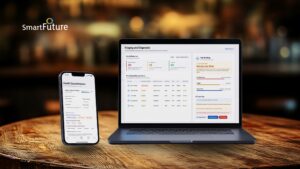
  • Smart healthcare dashboards
  • Cellular healthcare connectivity
  • EHR and EMR integrations
  • Automated workflow support

Through this ecosystem, healthcare providers can monitor patients more consistently while improving operational visibility across different care environments.

For example, hospitals managing post-discharge recovery programmes can use remote patient monitoring systems to track patient conditions after discharge. Instead of waiting for the next physical appointment, healthcare teams can receive earlier visibility if a patient’s condition begins changing during recovery.

This allows care teams to intervene earlier while helping reduce unnecessary hospital visits and delayed treatment responses.

SmartFuture Solutions for Different Healthcare Environments

To support different healthcare needs, SmartFuture offers several connected healthcare solutions designed for modern patient care workflows.

These include:

  • Hospital at Home Solution
  • Remote Patient Monitoring Solutions
  • Resident Tracking Solution
  • Wellness and Connected Healthcare Ecosystem

These solutions support:

  • Continuous patient monitoring
  • Elderly care management
  • Chronic disease monitoring
  • Rehabilitation programs
  • Emergency healthcare response
  • Workplace wellness initiatives

In addition, connected healthcare systems also help centralize patient information and improve coordination between healthcare teams.

AI and Remote Monitoring Are Changing Healthcare Workflows

Artificial Intelligence (AI) is also becoming part of modern healthcare operations, especially in patient monitoring and healthcare data analysis.

Today, AI-powered healthcare systems can help hospitals:

  • Detect patient deterioration earlier
  • Improve patient prioritization
  • Monitor health trends continuously
  • Reduce monitoring gaps
  • Support faster intervention
  • Improve operational efficiency

For example, if a patient recovering at home shows declining oxygen levels alongside worsening symptoms, AI-powered systems can automatically flag the case for earlier clinical review.

This helps healthcare teams respond more quickly while improving visibility across larger patient populations.

According to HIMSS Healthcare Technology Insights and McKinsey Healthcare Insights, healthcare organisations globally are continuing to prioritise connected healthcare infrastructure and digital transformation to improve operational sustainability and patient outcomes.

The Future of Smarter Hospital Operations

Why Connected White-Label Healthcare Devices Are Essential for Modern Hospitals

Healthcare is becoming more connected, more data-driven, and increasingly focused on continuous care beyond hospital walls.

As hospitals continue modernising operations, connected healthcare ecosystems are helping healthcare providers improve workflow efficiency while supporting more proactive patient care.

From hospital-at-home programmes and remote patient monitoring to AI-powered healthcare analytics and connected rehabilitation support, healthcare technology is helping organisations build more efficient and future-ready healthcare environments.

Ready to Explore Connected Healthcare Solutions?

If your organisation is exploring scalable healthcare infrastructure, remote patient monitoring programmes, or connected healthcare ecosystems, SmartFuture is glad to be your partner!

Contact us now:

📧 sales@oursmartfuture.com
📧 developer@oursmartfuture.com

📞 +65 8836 0984 (Mon–Fri, 10 AM–6 PM)
💬 Chat with us on WhatsApp for a faster response

Visit Us

📍 Singapore: 246 Macpherson Road, #03-01 Betime Building 348578
📍 USA: 651 N Broad St, Suite 201, Middletown, Delaware 19709
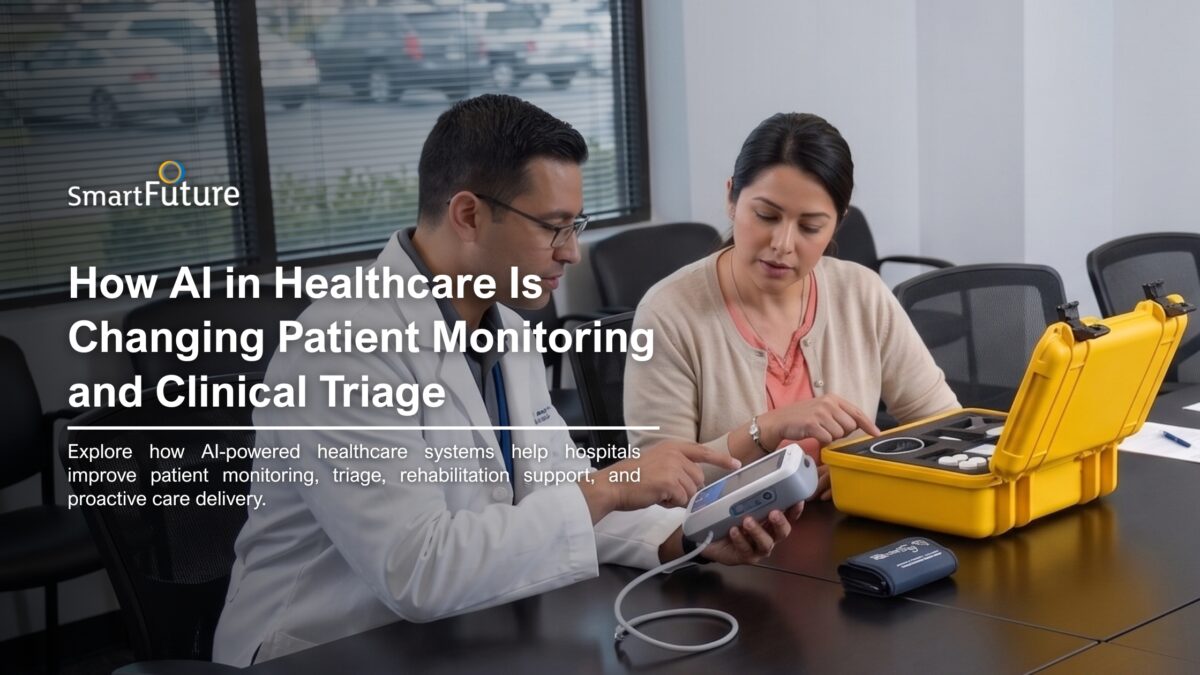
How AI in Healthcare Changes Patient Care

AI in healthcare is becoming increasingly important as healthcare providers around the world continue to face growing and complex challenges.

On one hand, patient demand is rising rapidly. Meanwhile, healthcare professionals are also experiencing increasing levels of burnout, operational pressure, and growing expectations to deliver faster, more personalized, and more efficient care.

Recent regulatory developments, in countries like Singapore, where updated healthcare AI governance guidelines were introduced to support responsible AI adoption. It reflects a broader global movement toward safer, more transparent, and more structured AI implementation in healthcare environments.

Because of this momentum, healthcare organisations are now showing stronger interest in AI-powered solutions for:

  • Patient monitoring
  • Clinical triage
  • Risk scoring
  • Rehabilitation support
  • Workflow automation

More importantly, this shift signals an important industry reality: healthcare can no longer rely solely on reactive care models. Instead, providers are moving toward proactive, data-driven, and preventive approaches to patient care.

Why Healthcare Providers Are Turning to AI

Traditionally, healthcare systems have depended heavily on manual reviews, delayed symptom reporting, and clinician-intensive processes. As a result, healthcare teams often spend significant amounts of time reviewing repetitive data, prioritizing cases manually, and responding only after conditions worsen.

However, patient volumes continue increasing while healthcare resources remain limited. In addition, clinicians are now expected to review larger amounts of patient data, monitor more remote cases, and respond faster to deteriorating conditions across multiple care settings.

This is where AI becomes increasingly valuable.

Rather than replacing healthcare professionals, modern healthcare AI acts as a decision-support layer that helps improve visibility, speed up triaging, and identify risks earlier. In other words, AI helps healthcare teams prioritize attention where it matters most.

At the same time, healthcare organizations are also becoming more focused on implementing AI responsibly. As AI adoption accelerates, there is growing emphasis on:

  • Human oversight
  • Patient safety
  • Transparent decision-making
  • Clinically accountable AI systems

Therefore, the goal of healthcare AI is not automation for the sake of replacing people, but rather enabling clinicians to work more efficiently while improving patient outcomes.

How SmartFuture Integrates AI in Healthcare Solutions

As demand for intelligent healthcare systems grows, SmartFuture has been actively developing AI-powered healthcare devices and digital health solutions designed to support modern clinical workflows and remote patient care.

SmartFuture’s ecosystem combines:

  • AI-powered Remote Patient Monitoring (RPM)
  • Intelligent patient scoring systems
  • Predictive health monitoring
  • Conversational rehabilitation support
  • AI-assisted triaging
  • Smart healthcare dashboards
  • Automated health data collection

Through connected devices and intelligent healthcare software, SmartFuture enables healthcare providers to monitor patient conditions more proactively and efficiently.

Instead of relying solely on periodic check-ups, SmartFuture’s AI-powered solutions allow healthcare teams to receive continuous patient insights through real-time data collection and predictive analysis.

This creates a more connected, responsive, and preventive healthcare experience for both clinicians and patients.

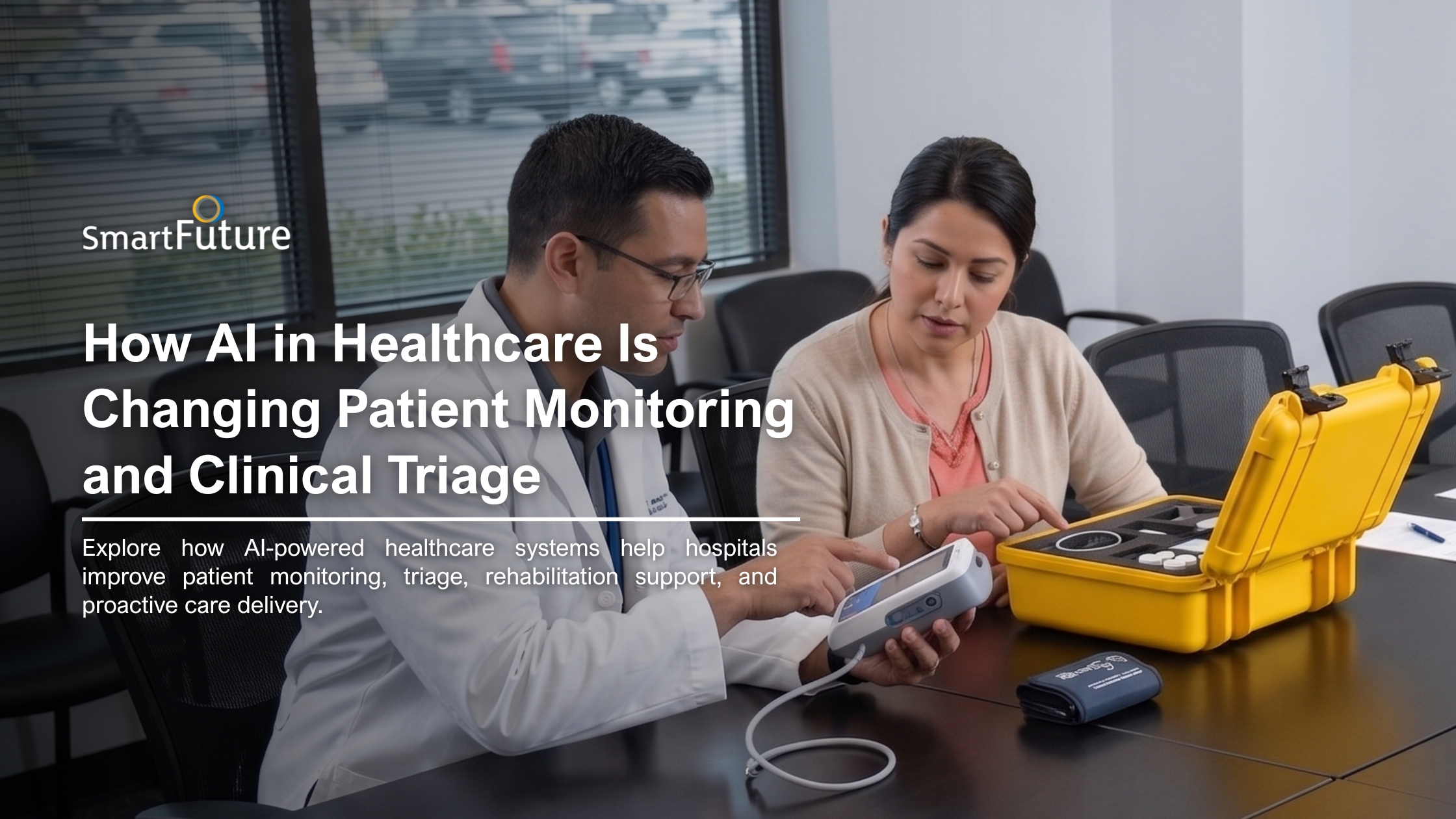
AI-Powered Patient Monitoring Enables Earlier Intervention

AI in Healthcare

One of the fastest-growing applications of healthcare AI is predictive patient monitoring and this is one of the key areas where SmartFuture’s AI-powered ecosystem plays an important role.

SmartFuture devices and monitoring platforms can continuously analyze multiple health indicators simultaneously, including:

  • Oxygen saturation (SpO₂)
  • Blood pressure
  • Heart rate trends
  • Rehabilitation adherence
  • Patient questionnaires
  • Symptom progression

By analysing these signals together, machine learning models can detect early deterioration patterns before conditions become critical.

For example, if a rehabilitation patient begins reporting worsening breathlessness while oxygen levels gradually decline, SmartFuture’s AI monitoring system can automatically prioritize that patient for clinical review before the situation escalates further.

As a result, healthcare teams can:

  • Detect deterioration earlier
  • Reduce avoidable hospital readmissions
  • Prioritize high-risk patients faster
  • Improve care response times
  • Reduce monitoring blind spots

For patients, this creates a far more proactive healthcare experience. Instead of waiting until symptoms become severe, patients can receive earlier attention, intervention, and ongoing support.

AI in Healthcare Clinical Triage Helps Minimize Delays and Improve Care Efficiency

AI in Healthcare

In addition to patient monitoring, AI-assisted clinical triage is another area where SmartFuture solutions help improve healthcare efficiency.

Traditionally, clinicians manually review patient questionnaires, symptoms, and vital signs to determine urgency levels. However, this process becomes increasingly difficult at scale — especially in remote care programs, rehabilitation services, and chronic disease management.

To address this challenge, SmartFuture’s AI-assisted triage systems can automatically analyze patient submissions and generate intelligent risk scores based on:

  • Symptom severity
  • Vital sign abnormalities
  • Historical trends
  • Rehabilitation progression
  • Risk escalation patterns

Because of this, care teams can focus their attention on patients who require intervention most urgently.

Rather than reviewing every patient equally, clinicians can instead prioritize:

  • High-risk deterioration cases
  • Patients with worsening symptoms
  • Patients requiring immediate review
  • Cases needing escalation before complications occur

Importantly, AI does not replace medical judgment. Final clinical decisions still remain with healthcare professionals.

Instead, SmartFuture’s AI solutions reduce administrative burden while enabling clinicians to work more efficiently with better visibility across patient populations.

Conversational AI Improves Rehabilitation Adherence

AI in Healthcare

Beyond monitoring and triage, SmartFuture also integrates conversational AI into rehabilitation support workflows.

Many rehabilitation programs struggle with:

  • Missed sessions
  • Poor exercise consistency
  • Low patient engagement
  • Limited follow-up outside clinical settings

To help address this issue, SmartFuture’s AI-powered rehabilitation companion supports patients throughout their recovery journey by providing:

  • Exercise reminders
  • Symptom check-ins
  • Educational reinforcement
  • Rehabilitation guidance
  • Frequently asked question support

As a result, patients experience a more continuous and connected care journey beyond hospital visits alone.

For patients recovering from cardiovascular, pulmonary, or orthopaedic conditions, stronger engagement often leads to better rehabilitation outcomes and more consistent recovery progress over time.

Healthcare AI Must Be Safe, Transparent, and Human-Centeredd

As AI adoption continues accelerating globally, healthcare organizations are also recognizing the importance of responsible implementation.

Ultimately, the most effective healthcare AI systems are not designed to replace clinicians. Instead, they are designed to:

  • Support faster clinical decisions
  • Improve patient monitoring
  • Reduce operational burden
  • Enable earlier intervention
  • Enhance patient engagement

With AI-powered healthcare devices, predictive monitoring systems, intelligent dashboards, and rehabilitation support solutions, SmartFuture is helping healthcare providers modernize patient care while maintaining a human-centered approach.

Therefore, the conversation is no longer about whether AI belongs in healthcare.

Instead, the focus is now shifting toward how healthcare organisations can implement AI responsibly to improve patient outcomes, clinician efficiency, and long-term care sustainability.

Ready to Explore AI-Powered Healthcare Solutions?

As healthcare providers continue modernising patient care, AI-powered monitoring, triage, and rehabilitation systems are becoming increasingly essential for improving efficiency, patient engagement, and clinical outcomes.

If your organisation is exploring AI implementation for healthcare workflows, remote patient monitoring, or intelligent rehabilitation support, SmartFuture is ready to help. Contact us now!

📧 sales@oursmartfuture.com
📧 developer@oursmartfuture.com

📞 +65 8836 0984 (Mon–Fri, 10 AM–6 PM)
💬 Chat with us on WhatsApp for a faster response

Visit Us

📍 Singapore: 246 Macpherson Road, #03-01 Betime Building 348578
📍 USA: 651 N Broad St, Suite 201, Middletown, Delaware 19709
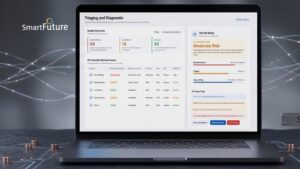
 

Hospital at Home Solution: 5 Years of Innovation and Advanced Remote Health Diagnostics

It was our pleasure to join in the NUHS@Home 5th Anniversary celebration, a milestone that highlights the expanding success and increasing significance of remote, patient-focused care. 

What It Is?

We were thrilled to celebrate the NUHS@Home 5th Anniversary, a powerful reminder that high-quality healthcare doesn’t have to mean leaving home. Our core mission is to make home care feel just as safe and sophisticated as the hospital. Our SmartFuture Hospital at Home Solution is the key to modern healthcare, integrating high-level diagnostics to give clinicians everything they need to treat patients right where they’re most comfortable.

Why Our Hospital at Home Solution Matters (The Human Impact)?

These newest features are about more than just data; they’re about confidence in providing excellent healthcare—for both the patient and the doctor. :

      1. Heart Monitoring, Uncompromised: We can now deliver 12-lead ECG monitoring at home. This is the difference between guessing and knowing in healthcare. For patients recovering from cardiac events, it means their doctor gets the same precise heart health picture they would in the hospital, allowing for immediate, confident management.
      2. A Clearer Picture, Faster: Our new Ultrasound integration means we can get critical visual information quickly. This leap forward in healthcare helps doctors make swift, accurate decisions, reducing stress and avoiding unnecessary transfers, leading to better patient health outcomes.
      3. Trust for the Care Team: These tools remove the anxiety from remote care. By giving doctors and nurses advanced, real-time data visibility, they have the full picture they need. This empowers them to treat complex cases at home using our Hospital at Home Solution, knowing they haven’t compromised on the quality of care.

Empowering Clinicians for the Next Era of Care

These new technologies are not merely for the monitoring of patients, but for empowering clinicians. By providing advanced, real-time diagnostic powers, we are enabling physicians and nurses with the confidence and capability to treat acutely ill patients in the home setting with the same care and expertise that they would in a hospital setting.

This seamless integration of high-level technology into an easy remote platform is the secret to successfully scaling Hospital-at-Home programs.

Ready to imagine the next generation of patient care? Contact us to explore how we can implement these advanced Remote Care Solutions for your healthcare system.

📧 Email: sales@oursmartfuture.com
📞 Phone (SG): +65 8836 0984
📞 Phone (US): +1 (512) 717-6408
📍 Singapore Office: 246 Macpherson Road, #03-01 Betime Building, Singapore 348578
📍 Delaware Office: 651 N Broad St, Suite 201, Middletown, Delaware 19709