
X
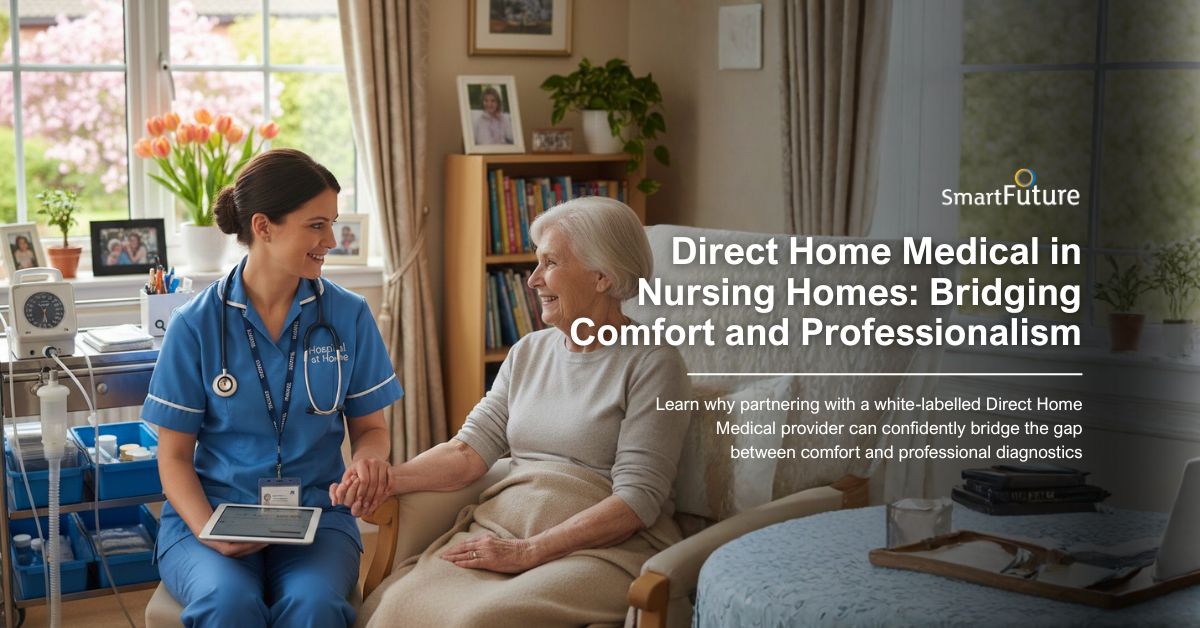
The evolution of Hospital-at-Home (HaH) and Direct Home Medical implementation services in Singapore has reshaped acute care delivery by decentralising inpatient services into residential environments.
Building on this model, the Hospital-at-Nursing Home (HaNH) pilot introduced by the Ministry of Health extended hospital-level care directly into nursing homes.
Preliminary findings from Sengkang General Hospital demonstrate feasibility, comparable length of stay to traditional HaH, and meaningful benefits in admission avoidance and early supported discharge.
However, nursing home residents represent a more vulnerable cohort with higher frailty, multimorbidity, and post-discharge risks. These findings underscore a crucial insight: while clinical models are foundational, the success of implementation relies heavily on robust remote diagnostics, real-time monitoring infrastructure, and trusted technology partners.
For nursing homes in Singapore, partnering with a white-labelled, trusted direct home medical device provider can bridge operational gaps, strengthen clinical oversight, and increase the success rate of Hospital-at-Home extensions.
Singapore’s rapidly ageing population has intensified healthcare demand. In 2023 alone, older adults (≥65 years) accounted for:
Traditional hospitalisation often leads to:
The Hospital-at-Home (HaH) programme, introduced in Singapore in 2018 and expanded during COVID-19, demonstrated that inpatient-level care can be delivered safely in patients’ homes through remote monitoring, medication administration, and virtual consultations.
Recognising its benefits, the Ministry of Health approved the pioneering HaNH pilot, which brings hospital-level services directly into nursing homes.
Between November 2023 and December 2024, a prospective study compared:
HaNH patients were significantly older (mean age 80.3 years vs. 54.5 years in HaH).
Common diagnoses included:
The median length of stay in HaNH was 3 days, statistically comparable to HaH (p = 0.73).
This demonstrates that hospital-level treatment can be delivered efficiently within nursing homes without prolonging illness duration.
Escalation to physical hospital facilities occurred in:
Although adjusted risk (aRR = 1.32) attenuated after accounting for age and gender, the findings highlight a central issue:
Nursing home residents are clinically fragile and require tighter monitoring thresholds.
HaNH patients demonstrated higher post-discharge risks, particularly within 30 days:
Risks declined over 60 and 90 days but remained elevated compared to HaH.
This trend aligns with global literature: nursing home residents have lower physiological reserves and higher frailty burdens.
Yet, an important nuance emerges:
The higher risk profile does not invalidate HaNH. Rather, it underscores the necessity of a stronger diagnostic infrastructure within nursing homes.
Despite higher escalation and post-discharge events, HaNH offers substantial system-level and patient-centred benefits:
In land-scarce Singapore, building more infrastructure is unsustainable. HaNH alleviates bed shortages.
Three patients avoided hospital admission entirely. Thirteen were discharged early from the wards.
Nursing home residents remain in familiar environments, lowering exposure to nosocomial pathogens.
One mortality occurred under palliative care, aligned with the patient’s preferred place of death, an ethically significant outcome.
The study identified operational challenges:
These findings point to a systemic requirement:
Hospital-level care cannot rely on clinical workflows alone; it demands reliable, integrated medical technology.
Without real-time monitoring and standardised diagnostic tools, escalation risk remains high.
To strengthen Hospital at Home implementation, nursing homes require:
A white-labelled Direct Home Medical and Remote Patient Monitoring (RPM) solution enables nursing homes to operate with hospital-grade infrastructure while maintaining branding continuity and operational autonomy.
A trusted provider ensures calibrated, hospital-grade devices (BP monitors, pulse oximeters, digital thermometers, ECG patches) that align with acute care protocols.
Automated alerts reduce the delay in detecting:
This directly addresses the primary escalation drivers identified in HaNH.
With intuitive dashboards and training support:
Structured RPM data enables predictive analytics for:
This directly supports the study’s recommendation for improved inclusion criteria and predictive modelling.
The HaNH pilot demonstrates three key lessons:
While the pilot achieved a comparable length of stay to HaH, escalation and post-discharge events highlight an implementation gap, not a model failure.
Strengthening technology ecosystems can meaningfully reduce these risks.
Singapore’s Ministry of Health is actively exploring the expansion of value-based care models nationwide.
For broader rollout, the system must address:
White-labelled Direct Home Medical providers offer scalability advantages:
Such partnerships reduce operational friction and improve stakeholder confidence, particularly among family members who may initially perceive brick-and-mortar hospitals as superior.
The essence of Hospital at Home lies in reconciling two traditionally opposing paradigms:
| Traditional Hospital | Nursing Home Setting |
| High diagnostic capacity | High comfort & familiarity |
| Risk of delirium | Reduced stress |
| High infection exposure | Controlled environment |
| Centralised resources | Limited infrastructure |
Direct home medical technology bridges this divide.
With hospital-grade remote diagnostics embedded in nursing homes, residents receive:
The Hospital-at-Nursing Home pilot marks a transformative milestone in Singapore’s healthcare evolution.
While nursing home residents inherently carry a higher clinical risk, the previous cases and programmes demonstrated feasibility, comparable length of stay, and meaningful admission avoidance.
The higher escalation and post-discharge risks do not diminish the model’s value. Rather, they illuminate the necessity for:
In the next phase of Hospital-at-Home expansion, success will not depend solely on clinical protocols, but on the ecosystem that supports them.
By partnering with a white-labelled and trusted Direct Home Medical provider, nursing homes can confidently bridge the gap between comfort and professional diagnostics, ensuring that acute care remains not only accessible but safe, scalable, and future-ready in Singapore.
As a white-labelled Direct Home Medical and Remote Patient Monitoring provider in Singapore, Smart Future aligns with the future trajectory of Hospital-at-Home expansion.
Our approach supports:
By enabling nursing homes to deliver acute-level monitoring seamlessly, Smart Future helps reduce escalation risk and support sustainable scalability.

In many modern hospitals, nurses still spend time manually recording patient vital signs, clinicians often need to open multiple systems...
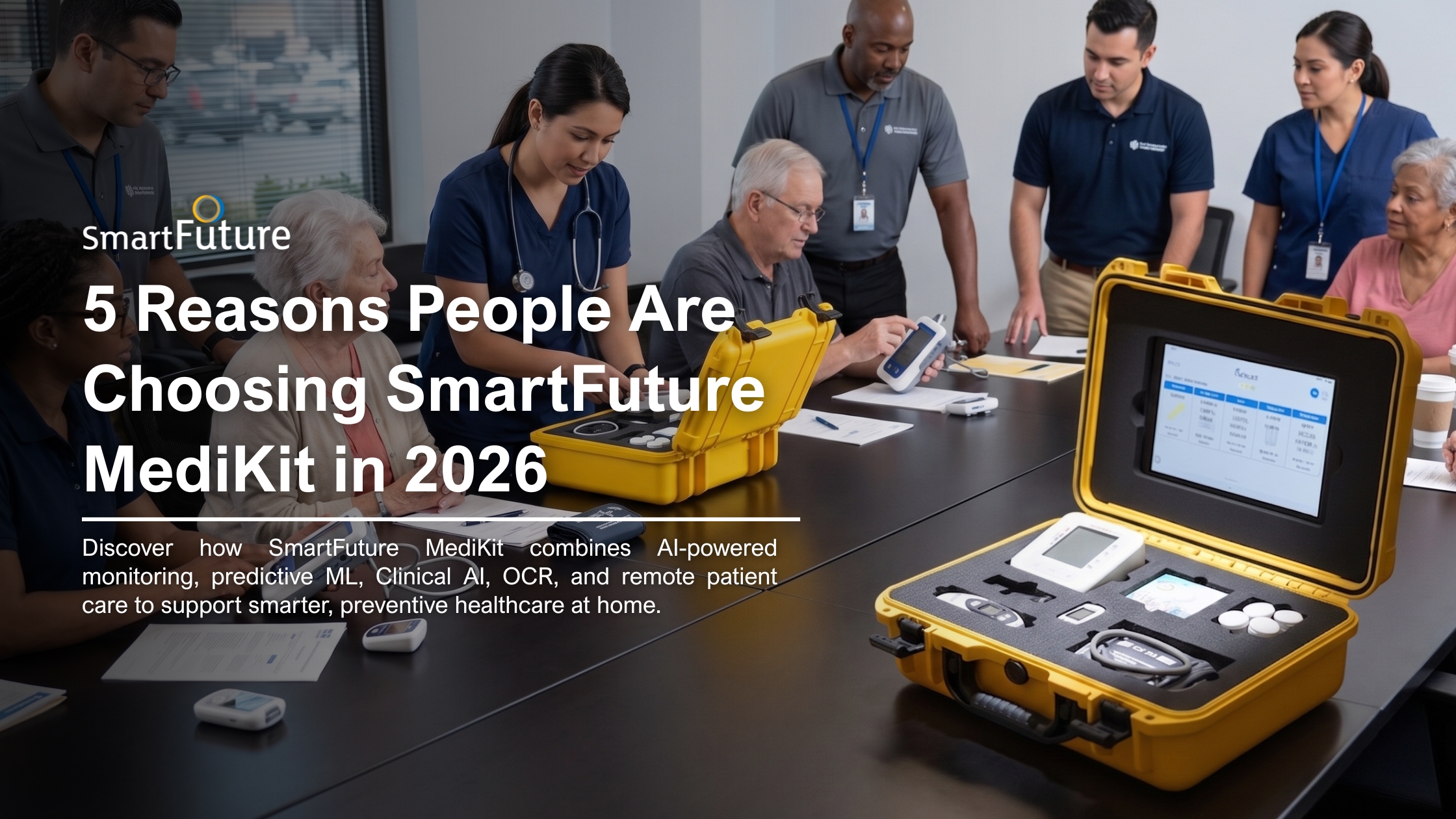
As healthcare systems continue to evolve, people are increasingly seeking solutions that are not only connected and accessible, but also...
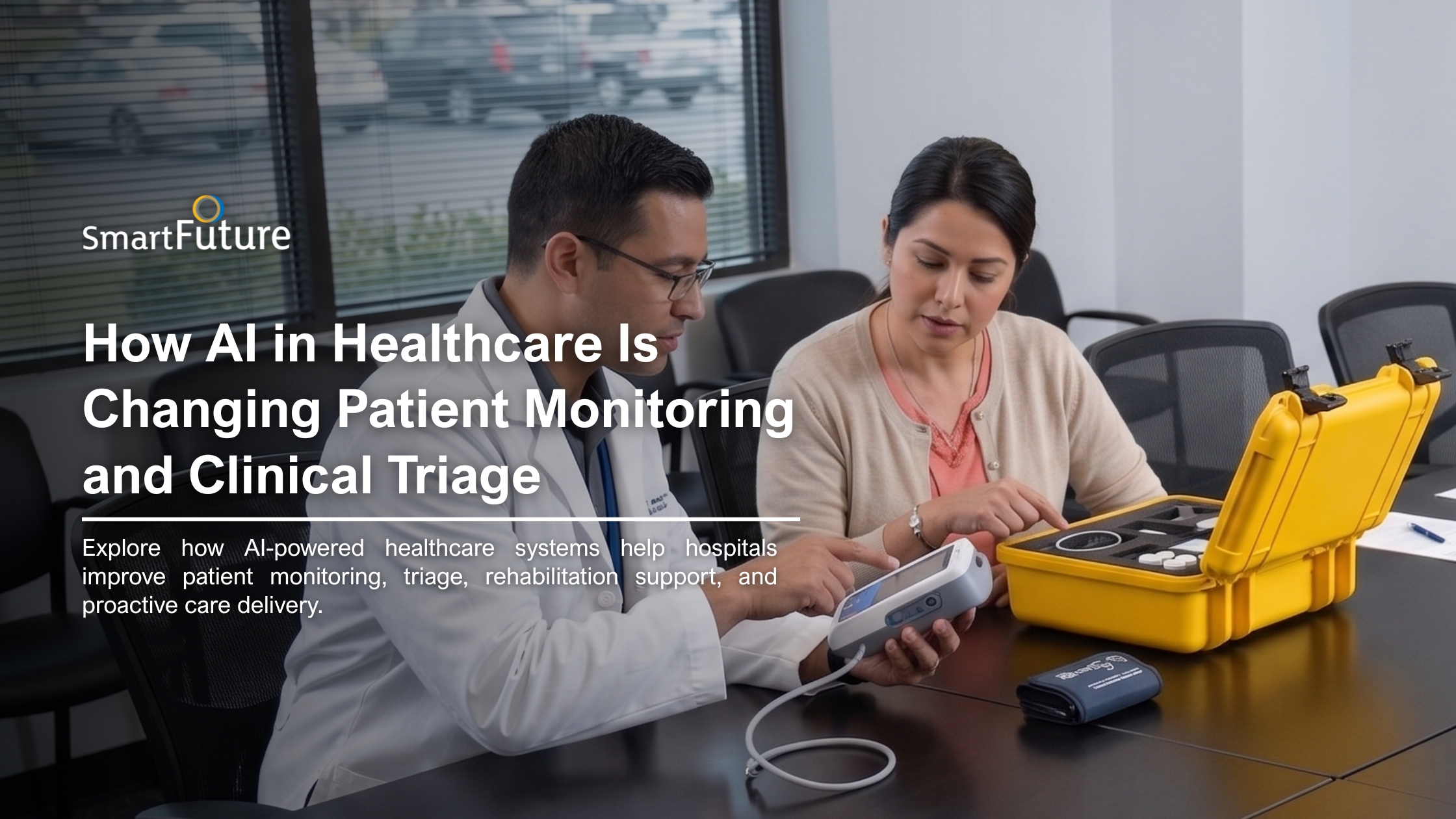
AI in healthcare is becoming increasingly important as healthcare providers around the world continue to face growing and complex challenges....
Follow our newsletter. We will regulary
update our latest
project and availability.

OurSmartFuture is a healthcare technology company specializing in white-label remote patient monitoring solutions for hospitals, clinics, and healthcare organizations worldwide. We help providers extend care beyond traditional settings through secure, scalable patient remote monitoring systems designed for modern healthcare delivery.
© 2026 SmartFuture - All Rights Reserved

 +65 8836 0984
 sales@oursmartfuture.com
 246 Macpherson Road, #03-01 Betime