X
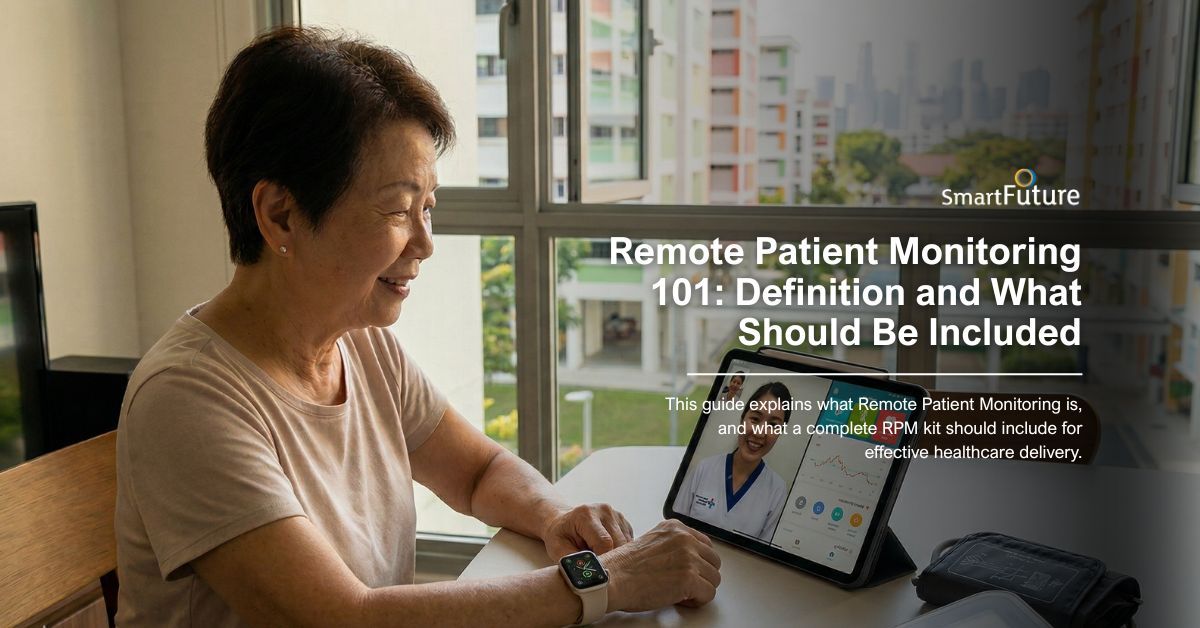
Healthcare is undergoing a major digital transformation, and one of the most influential technologies shaping the future of patient care is Remote Patient Monitoring (RPM). As hospitals and healthcare providers seek more efficient ways to manage patients outside traditional clinical settings, RPM has emerged as a powerful solution.
From chronic disease management to post-hospital recovery, Remote Patient Monitoring allows healthcare professionals to track patient health data in real time without requiring frequent hospital visits. For healthcare institutions, startups, and investors exploring digital health solutions, understanding the fundamentals of RPM is essential to implementing the right system.
Remote Patient Monitoring is one of the fastest-growing healthcare technologies worldwide. Healthcare systems are increasingly shifting from reactive care to preventive and continuous monitoring.
Several factors are driving the growth of RPM:
For hospitals and clinics, RPM offers the opportunity to monitor patients beyond hospital walls while maintaining high standards of care.
For patients, it provides greater convenience and continuous medical oversight without repeated visits to healthcare facilities.
Remote Patient Monitoring refers to the use of connected medical devices and digital technologies to collect patient health data outside traditional healthcare settings and transmit that data to healthcare professionals for review and analysis.
These systems allow physicians and care teams to monitor key health indicators such as blood pressure, oxygen levels, heart activity, weight, and body temperature from a patient’s home.
RPM is commonly used in healthcare applications such as:
By enabling real-time monitoring, RPM helps healthcare providers detect potential health issues early and intervene before conditions worsen.
A successful RPM program depends on several interconnected components that work together to collect, transmit, and interpret patient health data.
Connected medical devices are the foundation of Remote Patient Monitoring. These devices measure vital signs and health indicators directly from the patient.
Examples include blood pressure monitors, pulse oximeters, ECG monitors, weight scales, and thermometers. These tools must be medical-grade and clinically validated to ensure accurate readings.
RPM devices connect to a centralized digital platform that stores and processes patient health data. This software platform enables healthcare providers to access patient information securely.
It also ensures seamless data transmission from the patient’s device to the medical team.
Healthcare professionals need clear, visual insights to interpret patient data quickly. RPM platforms typically include dashboards that display trends, vital sign readings, and alerts in an easy-to-understand format.
These dashboards help clinicians monitor multiple patients simultaneously and identify potential issues.
An effective RPM system includes automated alerts for abnormal readings. If a patient’s blood pressure, oxygen level, or heart rhythm exceeds safe thresholds, the system immediately notifies healthcare providers.
These alerts allow clinicians to respond quickly, preventing complications and reducing hospitalizations.
As RPM adoption grows, various organizations are offering solutions in this space. Understanding the types of providers helps healthcare institutions choose the right partner.
Many hospitals are developing in-house RPM programs to monitor patients after discharge or manage chronic diseases remotely. These programs often integrate with existing hospital electronic medical record systems.
Home healthcare providers frequently use RPM technology to monitor elderly or chronically ill patients living at home. This approach allows caregivers to track patient health continuously while reducing unnecessary hospital visits.
Telemedicine companies increasingly incorporate RPM solutions into their platforms. By combining virtual consultations with real-time health monitoring, telehealth providers offer more comprehensive care services.
Some healthcare providers prefer white-labelled RPM solutions that allow them to deliver monitoring services under their own brand. These solutions include medical devices, software platforms, and technical support.
White-label RPM providers enable hospitals and healthcare startups to launch monitoring programs quickly without building the infrastructure from scratch.
A well-designed Remote Patient Monitoring kit should include essential medical devices that track key vital signs and health indicators.
Hypertension is one of the most common chronic conditions worldwide. A reliable digital blood pressure monitor allows clinicians to track cardiovascular health and detect potential risks.
Pulse oximeters measure oxygen saturation levels in the blood. This device is essential for monitoring respiratory conditions and detecting early signs of breathing problems.
Electrocardiogram (ECG) devices track heart rhythm and detect abnormalities such as arrhythmias. Continuous heart monitoring can help identify cardiac issues early.
Smart weight scales help monitor fluid retention and metabolic changes, particularly in patients with heart failure or obesity.
Body temperature monitoring remains a fundamental health indicator. Digital thermometers provide quick and accurate readings that can signal infection or illness.
Together, these devices provide a comprehensive view of a patient’s vital health metrics.
For healthcare providers looking to implement Remote Patient Monitoring, choosing the right technology partner is critical.
Smart Future offers white-labelled Remote Patient Monitoring ecosystems designed specifically for hospitals, clinics, telehealth providers, and healthcare startups.
The Smart Future RPM solution integrates:
By combining these elements into Direct Home Medical Kits, Smart Future enables healthcare providers to launch scalable RPM programs without the complexity of developing their own infrastructure.
These solutions support hospital-at-home initiatives, chronic disease monitoring, and remote patient care models that are becoming increasingly important in modern healthcare.
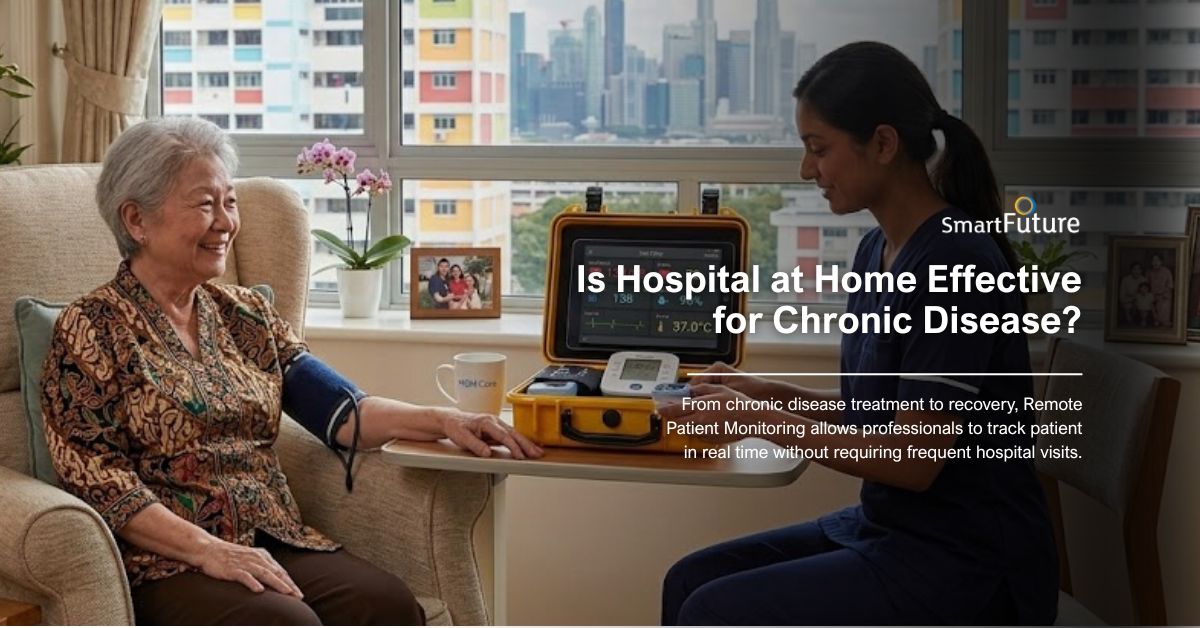

In 2023, the Centers for Medicare & Medicaid Services (CMS) in the United States reported that more than 300 hospitals...
Healthcare is undergoing a major digital transformation, and one of the most influential technologies shaping the future of patient care...
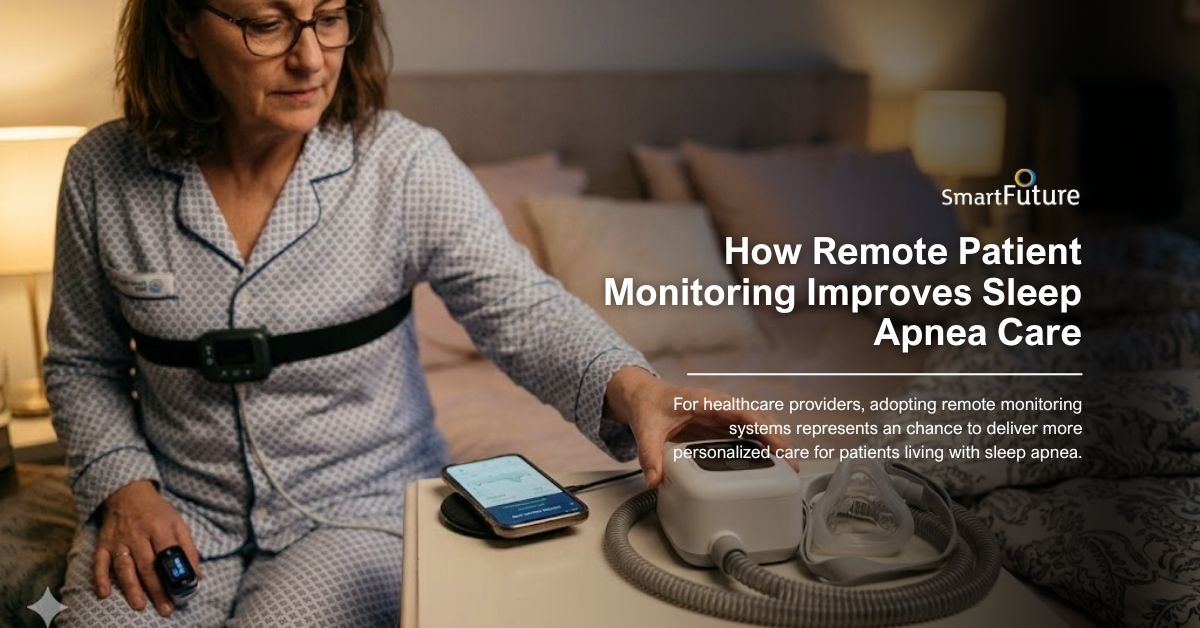
Sleep apnea has become one of the most common yet underdiagnosed sleep disorders worldwide. Characterized by repeated interruptions in breathing...
Follow our newsletter. We will regulary
update our latest
project and availability.

OurSmartFuture is a healthcare technology company specializing in white-label remote patient monitoring solutions for hospitals, clinics, and healthcare organizations worldwide. We help providers extend care beyond traditional settings through secure, scalable patient remote monitoring systems designed for modern healthcare delivery.
© 2026 SmartFuture - All Rights Reserved

 +65 8836 0984
 sales@oursmartfuture.com
 246 Macpherson Road, #03-01 Betime