
X
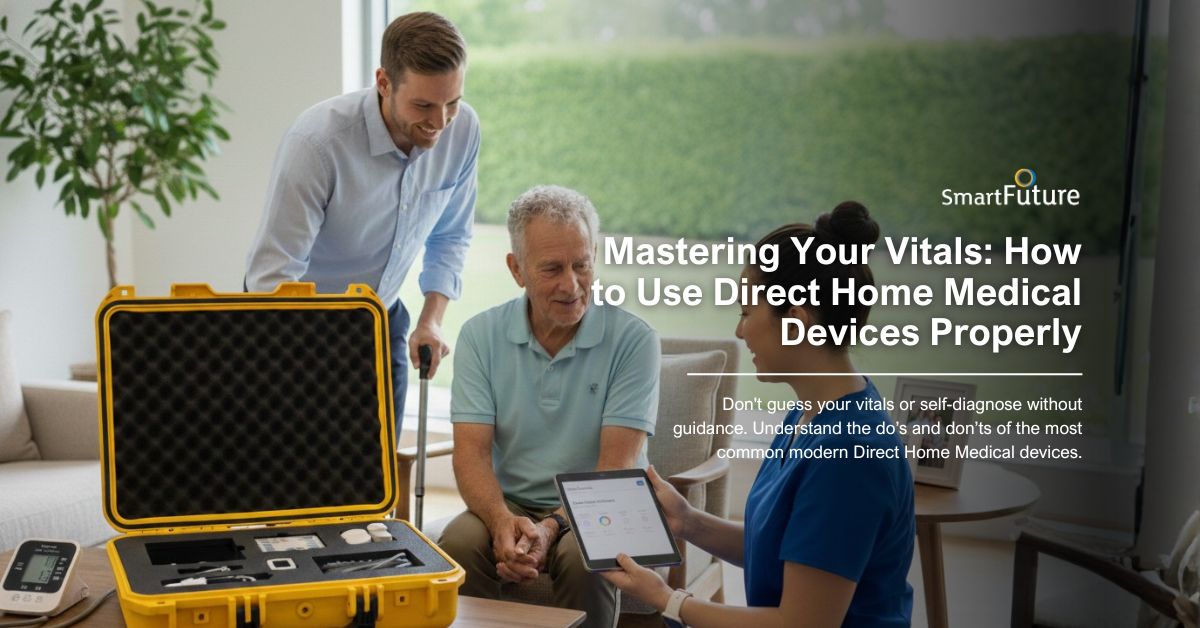
Do not guess your vitals. Do not self-diagnose without guidance. Do not ignore abnormal readings. Do monitor consistently. Do record trends. Do share results with your care provider. As healthcare shifts beyond hospital walls, direct home medical devices are becoming part of everyday life across homes, remote worksites, senior residences, cruise environments, and corporate wellness programs.
The opportunity is powerful: earlier detection, better disease management, and fewer emergency escalations. The risk, however, lies in misuse, inconsistent measurement, or misinterpretation of data.
This guide walks you through the do’s and don’ts of the most common devices found inside a modern Direct Home Medical Kit, and explains how structured use improves outcomes.
Vital monitoring devices generate health data. Data without discipline creates noise. Data with structure creates insight.
Incorrect placement of a Blood Pressure Monitor, poor timing with a Blood Glucose Monitor, or improper breathing technique during a Spirometer test can produce misleading readings. In remote settings, where clinical staff may not be physically present, accuracy becomes even more critical.
The goal is simple:
Standardize measurement. Reduce error. Enable timely escalation.
Blood pressure is one of the most widely tracked metrics in remote care and home-based programs.
| Do | Don’t |
| Sit quietly for 5 minutes before measuring | Measure immediately after exercise or caffeine |
| Keep feet flat on the floor | Cross your legs |
| Place cuff at heart level | Place cuff over clothing |
| Take readings at the same time daily | Rely on a single measurement |
Inconsistent positioning can change readings by 10–20 mmHg. Trends over time matter more than isolated numbers.
A Termometer is one of the simplest but most powerful screening tools, especially in infection control or post-operative care.
| Do | Don’t |
| Use the same measurement method consistently | Switch between oral, forehead, and ear without noting |
| Wait 15 minutes after drinking hot/cold liquids | Measure immediately after eating |
| Clean after each use | Share without disinfecting |
Even a low-grade fever can signal deterioration. Consistency ensures reliable tracking.
For diabetes management and metabolic monitoring, timing and calibration are critical.
| Do | Don’t |
| Wash hands before testing | Test with residue on fingers |
| Follow prescribed timing (fasting, post-meal) | Test randomly without schedule |
| Record readings with meal notes | Ignore contextual data |
Glucose trends guide dietary adjustments, medication titration, and preventive care.
Also read: Learn How to Implement Remote Patient Monitor devices across different locations
Portable Ultrasound devices are increasingly used in remote clinics, offshore platforms, and mobile inpatient programs.
| Do | Don’t |
| Ensure trained operator use | Self-operate without guidance |
| Use correct probe positioning | Apply excessive pressure |
| Store with protective casing | Leave exposed to dust/moisture |
Ultrasound requires competency. When integrated into structured programs, it supports early detection and triage decisions.
An ECG Monitor detects heart rhythm irregularities and supports cardiac oversight.
| Do | Don’t |
| Attach electrodes to clean, dry skin | Apply over lotion or sweat |
| Stay still during recording | Move or talk |
| Follow recommended duration | Shorten recording time |
Movement artifacts often mimic arrhythmias. Correct setup improves accuracy.
An Oximeter measures oxygen saturation and pulse rate.
| Do | Don’t |
| Remove nail polish | Use with dark polish or artificial nails |
| Warm cold hands before reading | Measure with cold fingers |
| Sit still during measurement | Take readings while moving |
In respiratory conditions, even small changes in oxygen saturation require attention.
A Dermatoscope supports skin examination and early lesion detection.
| Do | Don’t |
| Use proper lighting | Use in dim environments |
| Capture clear, focused images | Take blurred or angled shots |
| Share images with clinician | Self-diagnose based on online comparisons |
High-resolution imagery enables remote dermatological consultation.
A Spirometer measures lung capacity and airflow.
| Do | Don’t |
| Take full deep breath before exhaling | Blow weakly |
| Seal lips tightly around mouthpiece | Allow air leakage |
| Repeat test 2–3 times for accuracy | Rely on one attempt |
Technique influences readings. Coaching improves reliability.
A Home-Sleep Test monitors breathing patterns and sleep disturbances.
| Do | Don’t |
| Follow setup instructions carefully | Adjust sensors during the night |
| Sleep in usual environment | Change sleep habits during testing |
| Return device promptly for analysis | Delay data review |
Proper placement ensures accurate sleep apnea detection.
Using individual devices separately without coordination often leads to:
This is where structured integration becomes essential.
SmartFuture’s Direct Home Medical Kit consolidates essential tools into a single, rugged, deployment-ready solution.
Instead of fragmented tools:
Whether deployed in homes, senior care, remote workplaces, or cruise environments, the kit ensures consistent practice and operational visibility.
Healthcare organizations are moving toward unified monitoring ecosystems, not disconnected tools.
Monitoring is not about reacting to emergencies. It is about identifying patterns early.
When used correctly:
In structured environments, data becomes actionable insight.
| Question | Why It Matters |
| Are staff trained? | Reduces misuse |
| Are protocols standardized? | Ensures consistency |
| Is data transmitted securely? | Protects privacy |
| Is oversight centralized? | Enables timely intervention |
Healthcare delivery in 2026 is not confined to facilities. It extends to homes, distributed operations, and community environments.
The difference between effective remote care and chaotic monitoring lies in integration.
SmartFuture supports organizations that want structured, scalable, white-labeled solutions that maintain brand control and clinical oversight.
If you are building a remote monitoring program, expanding home-based care, or equipping distributed teams with medical readiness tools, SmartFuture’s Direct Home Medical Kit delivers reliability, integration, and operational visibility.
Contact SmartFuture today to explore how our Direct Home Medical Kit can strengthen your healthcare strategy.

Do not guess your vitals. Do not self-diagnose without guidance. Do not ignore abnormal readings. Do monitor consistently. Do record...
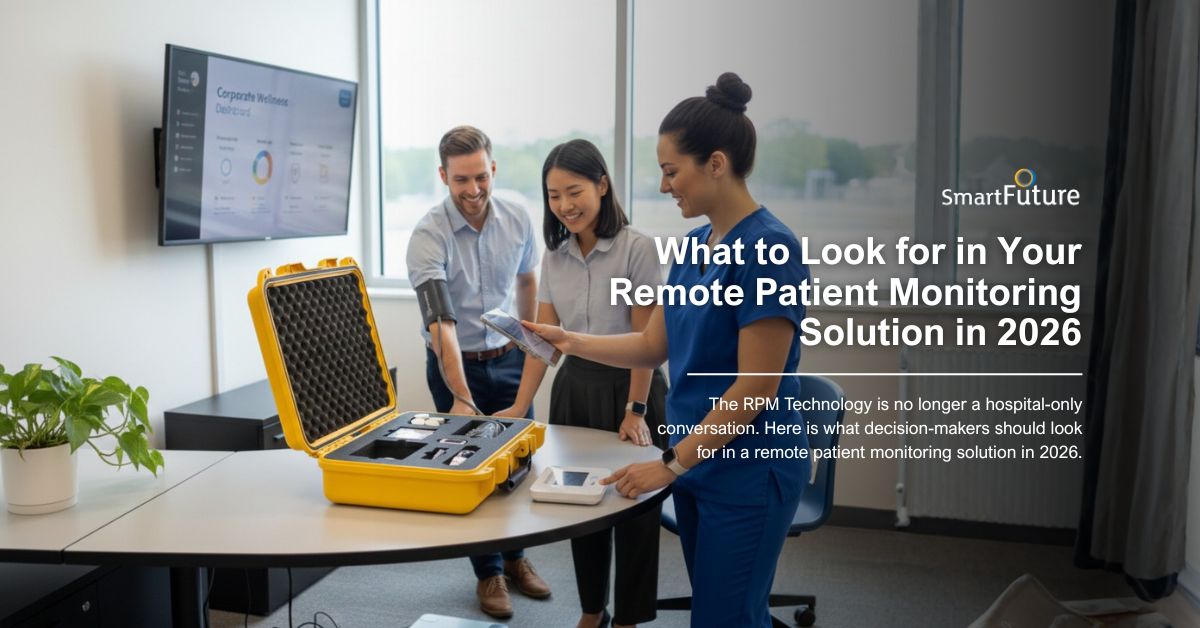
Remote patient monitoring solution is no longer a hospital-only conversation. By 2026, RPM has become infrastructure , embedded across corporate...
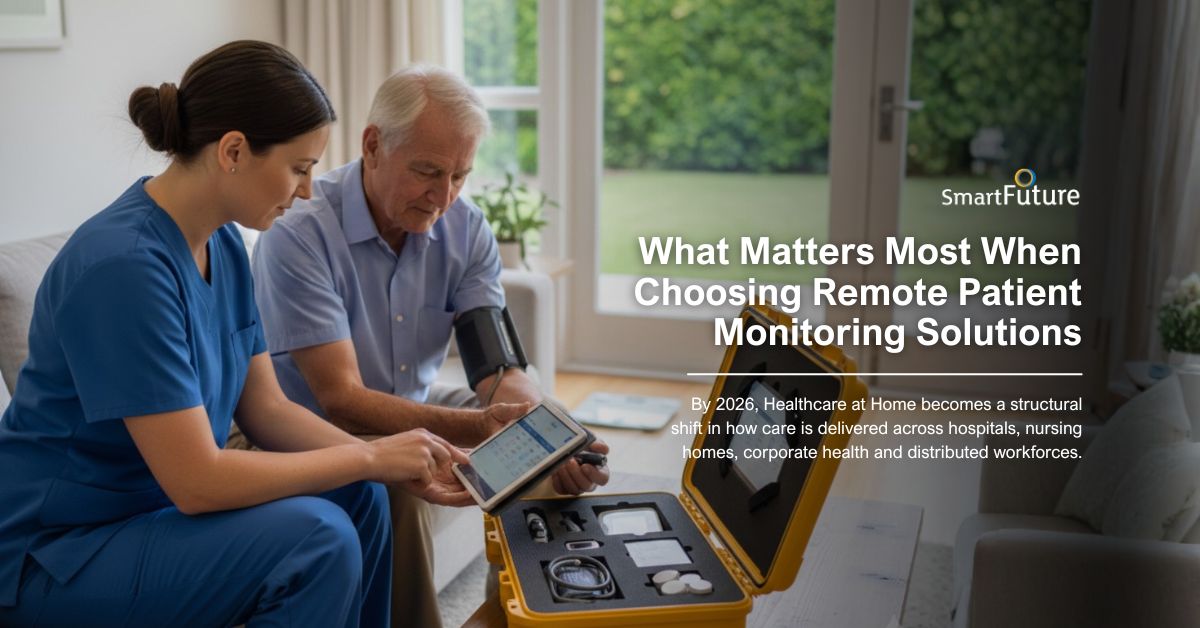
Healthcare at home is no longer an experiment. By 2026, it is a structural shift in how care is delivered...
Follow our newsletter. We will regulary
update our latest
project and availability.

OurSmartFuture is a healthcare technology company specializing in white-label remote patient monitoring solutions for hospitals, clinics, and healthcare organizations worldwide. We help providers extend care beyond traditional settings through secure, scalable patient remote monitoring systems designed for modern healthcare delivery.
© 2026 SmartFuture - All Rights Reserved

 +65 8836 0984
 sales@oursmartfuture.com
 246 Macpherson Road, #03-01 Betime